
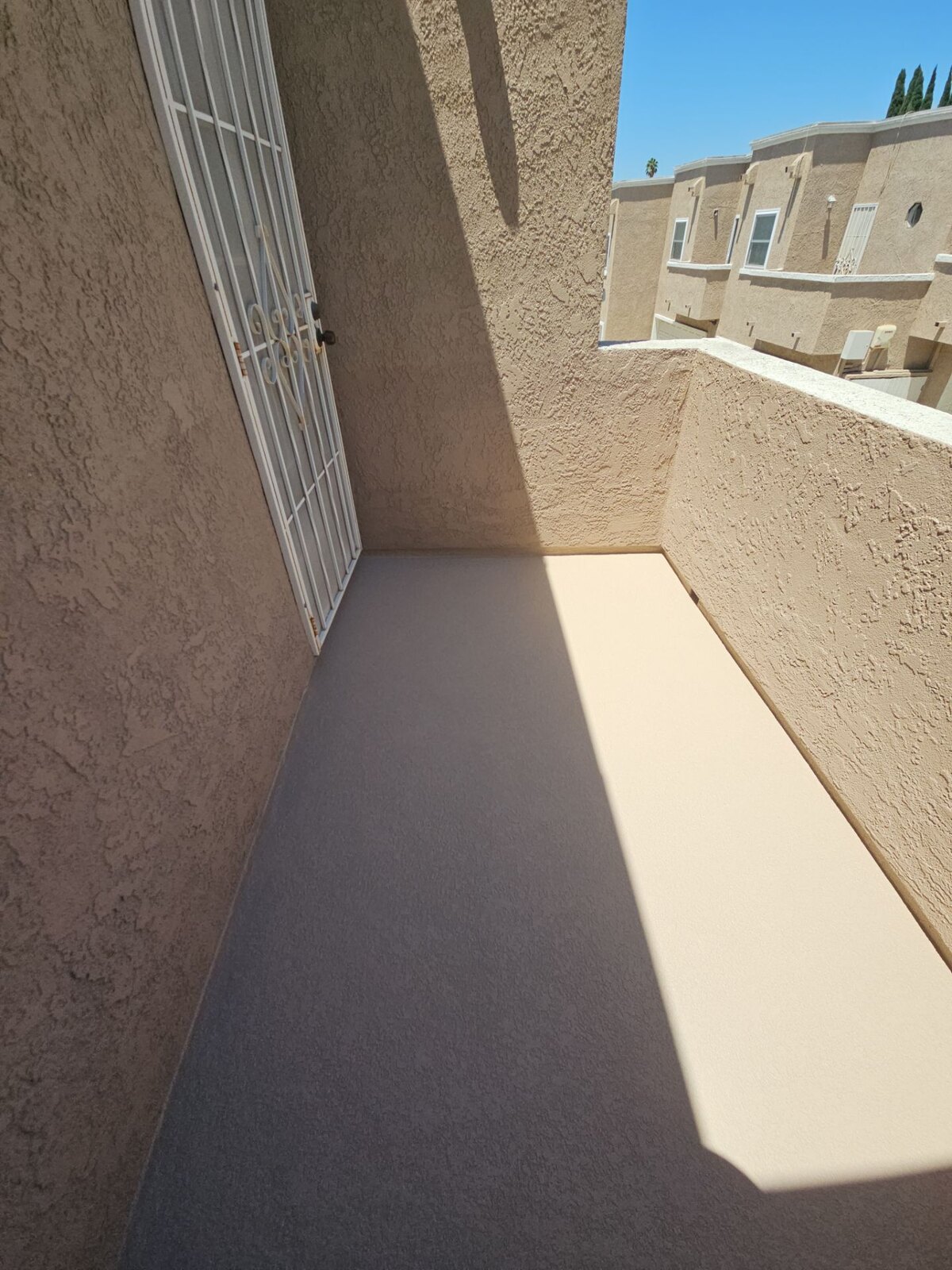
How adhesion, substrate condition, leaks, drainage and detail failures affect the choice between maintenance and replacement.
Decide whether the problem is the finish or the structure
A worn finish, damaged waterproofing and deteriorated structural components call for different work. On a wood deck, split or decayed boards, loose connections and unstable guardrails need evaluation before appearance upgrades. On a coated deck, a new topcoat cannot restore damaged plywood or framing.
Replacement may allow changes to layout, colors or access, but design changes and added loads need their own review. Compare the complete repair scope and future care requirements rather than assuming that replacement automatically increases property value.
A recoat maintains a system that is still working
Recoating can renew wear surfaces and UV protection when the existing waterproofing remains securely bonded, compatible and supported by a sound substrate. It is maintenance—not a way to stabilize loose layers or conceal damaged wood.
Replacement is considered when failure is widespread
Recurring leaks, broad areas of delamination, soft plywood, failed flashing or multiple incompatible coatings can make another surface application a poor investment. Removal allows the receiving surface and transitions to be examined and rebuilt as one system.
- Multiple hollow or loose coating areas
- Leaks that return after spot repairs
- Soft, swollen or deteriorated substrate
- Cracks tied to movement below the surface
- Failed drains, edges or wall transitions
- Unknown or incompatible coating layers
Small tests can improve the decision
Visual review alone may not show whether the existing layers are bonded. Adhesion checks, moisture evaluation and limited exploratory openings can provide better information before a large scope is approved. Testing should be selected for the substrate and conditions involved.
Compare expected value, not only initial price
A lower-cost recoat is valuable when it extends a sound system. It is expensive when underlying failure forces the same area to be removed soon afterward. A proposal should state the assumptions behind the recommendation and which conditions would change it.