
Understand the difference between a metal roof coating and the flashing details that connect a waterproof deck to walls, doors and edges.
A metal roof needs a roof-specific evaluation
A leak near a metal roof may involve panels, laps, fasteners, penetrations or flashing. Surface rust and a failed joint are different repair conditions. Before selecting a coating, a qualified roofing professional should establish the condition of the metal, existing finish, attachments and leak path.
The proposal should identify cleaning and preparation, corroded components needing repair or replacement, compatible treatment and the manufacturer's details. A coating is not a substitute for restoring damaged metal or correcting a failed connection. Standalone metal roof work should have a separately confirmed scope and responsible roofing contractor.
Deck flashing connects the membrane to the building
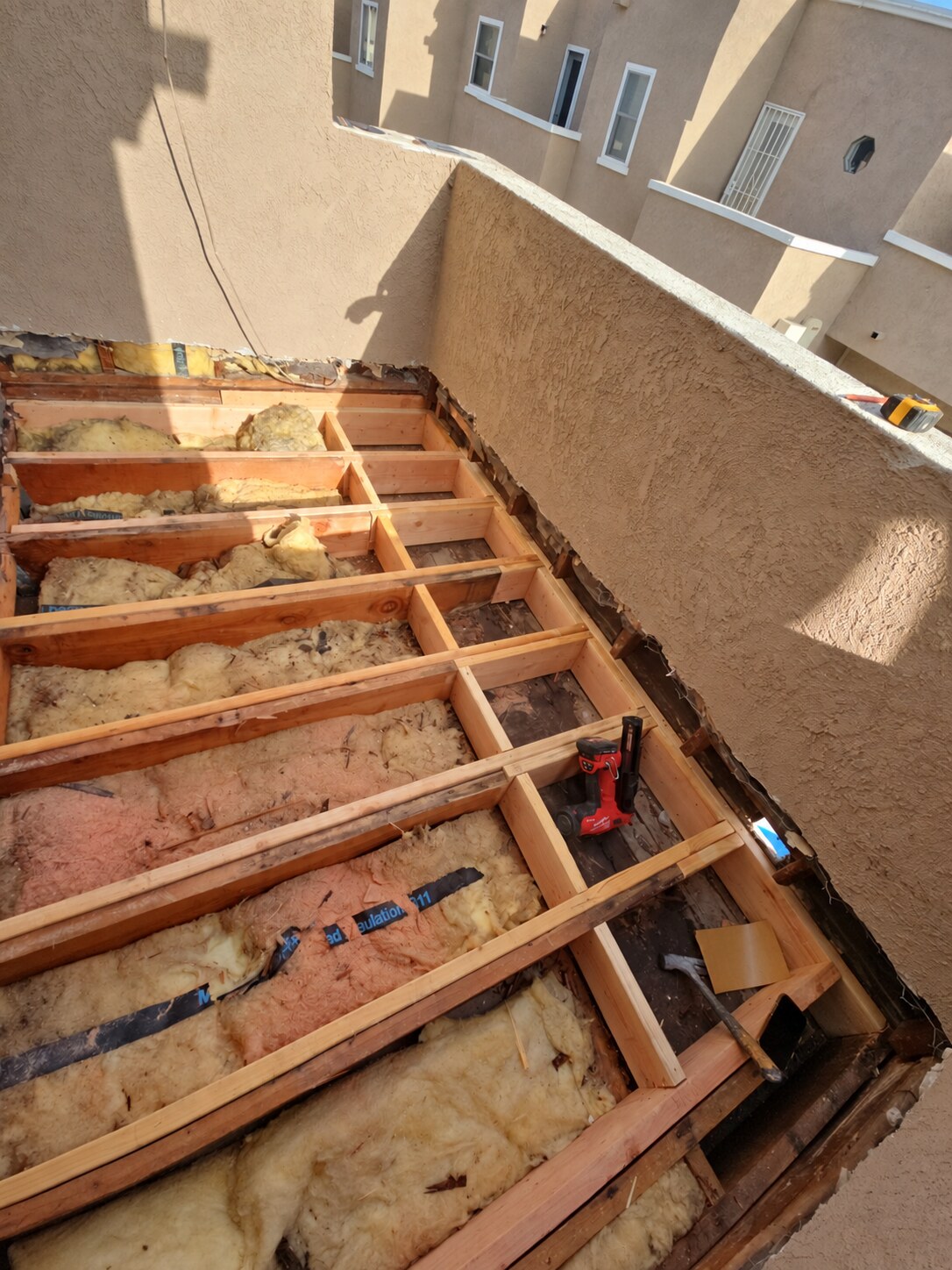
Flashing at wall bases, door thresholds, deck edges and penetrations must tie into the surrounding waterproofing. Simply sealing the visible edge may leave a failed overlap or damaged material concealed beneath the finish.
During deck repairs, review which adjacent surfaces need to be opened, the condition of existing metal and how the new detail connects to the membrane. Material, primer, reinforcement and attachment requirements come from the selected system's details.
Manufacturer examples of deck-to-wall, edge and threshold detailsDescribe where and when the water appears
Photograph rust staining, separated joints, door corners, wall bases and stains below the area. Record whether water appears during rain, cleaning or irrigation. Do not coat over the evidence before the leak is evaluated.
For a balcony, walkway or rooftop deck, California Decking & Waterproofing evaluates flashing as part of the complete waterproofing scope, including access, preparation and coordination with adjoining trades.
Rooftop deck waterproofing and transitions